the power of cell therapy
Understanding Regeneration at the Cellular Level
MEST — Miskawaan Embedded Stem Cell Therapy
Cell therapy is one of the most fascinating frontiers in regenerative science. Instead of focusing only on symptoms, it looks at how the body restores balance, repairs, and adapts—at the cellular level. MEST is Miskawaan’s framework for making this field easier to understand, with an integrative and functional lens.

What Is Cell Therapy?
Cell therapy refers to the use of biologically active cells that interact with the body’s internal environment. In clinical research worldwide, certain types of cells—like mesenchymal stromal cells (MSCs) are being investigated for their ability to:
- Support natural tissue balance
- Encourage repair responses
- Influence inflammation pathways
- Restore internal equilibrium
- Enhance physical vitality
Why Cell Therapy
Has Captured Global
Attention?
As we age—or when the body is under sustained stress—cellular communication and repair processes can become less efficient. That’s why regenerative science focuses on improving the internal conditions that support restoration.
Regeneration is not only about the cells—it’s also about the environment around the cells.


What Is MEST?
MEST — Miskawaan Embedded Stem Cell Therapy is Miskawaan’s most innovative regenerative programme that aims to replace damaged cells within the body and helps restore your own healing potential with a variety of techniques to overcome disease, injury and inflammation. Developed by our co-founder and Medical Director, Dr. Johannes Wessolly, together with our expert team of doctors.
MEST is achieved through the application and support of a tailored and balanced combination of:
Hormones
Peptides
Genetics
Optimised Nutrients
Growth Factors
Stress Reduction
MHG Proprietary
Infusions (IV)
Mitochondria
Therapy
Detox
(Includes – optimizing
gut health)
Applications Being Studied Internationally
Cell therapy continues to be researched across multiple areas. Below are common categories of scientific and clinical interest worldwide.
Aesthetic & Anti-Aging Research
· Facial rejuvenation
· Hair wellness and growth support
· Recovery following surgical procedures
· General rejuvenation strategies
· Male vitality research
Neurological Research
· Parkinson’s disease
· Alzheimer’s disease
· Autism spectrum–related studies
Skin Wellness
· Eczema
· Psoriasis
Functional, Musculoskeletal & Immune Research
· Osteoarthritis
· Musculoskeletal disorders
· Autoimmune-related conditions
· Metabolic research, including diabetes
Enhancing the Cellular Environment
In regenerative programs, supportive therapies are often used to help optimize the internal environment. In MEST, these are discussed as enhancers—tools that may support cellular readiness and balance.
Regenerative Enhancers Used Alongside MEST
Advanced IV Therapy
Nutrient-rich infusions that support hydration, energy, and overall wellness.
Platelet-Rich Plasma (PRP)
A concentration of your own platelets containing natural growth factors involved in repair and rejuvenation.
NK Cells
Powerful immune-boosting cells that only target and destroy abnormal or virus-infected cells.
Exosomes
Tiny messengers that allow cells to communicate and coordinate renewal processes.
DFPP (Double Filtration Plasma Pheresis)
A specialised filtration approach designed to refresh and rebalance the internal system.
Peptides
Small protein messengers that guide cells to repair, regenerate, and function more efficiently.
The Miskawaan Approach
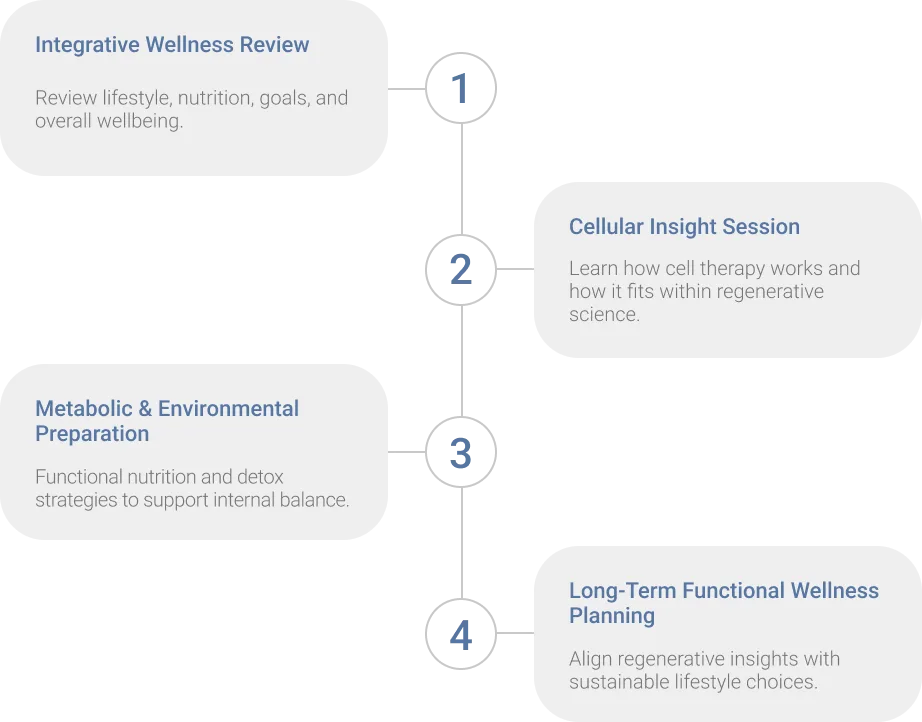
At Miskawaan, cell therapy is viewed as part of a broader regenerative ecosystem. MEST is built on integrative and functional principles that consider multiple factors influencing cellular health.
MEST brings together
· Advanced cellular science
· Functional wellness assessments
· Metabolic and detox readiness
· Integrative nutrition and lifestyle preparation
· Supportive regenerative strategies
· Long-term vitality planning


Learn how MEST and regenerative science align with integrative and functional wellness.
“All treatments are personalized, medically supervised, and based on advanced, evidence-informed protocols”